The Things No One Tells You About Pediatric Cancer Treatment
No one tells you how endless it feels.

The appointments.
The calendars.
The constant checking of dates, times, and next steps.
Sometimes I wish I had saved every calendar we were handed — each one filled to the edges with appointments, lab draws, and treatment days. After our initial two-week hospital stay, we were in clinic one or two times a week, sometimes more. Blood draws. Chemo. Lumbar punctures. Number checks. Waiting rooms that started to feel more familiar than our own home.
Life became measured in appointments.
Treatment Timelines Are Always Changing
When Parker was first diagnosed, we were given a treatment timeline. It felt comforting — something solid to hold onto. But very quickly, we learned that treatment doesn’t move forward based on a calendar. It moves forward based on numbers.
Everything depended on Parker’s counts. He had to be within a certain range to move on to the next phase. And while that uncertainty was incredibly hard, there was comfort in knowing that every decision was by the book — research-based, studied, and designed to give kids the best possible outcome.
Still, it’s exhausting to live in a state where plans are constantly shifting. You learn to stop asking when and start asking what’s next.
Steroid Weeks vs. Blina Months
There are hard parts of treatment that people don’t really understand unless they’ve lived them.
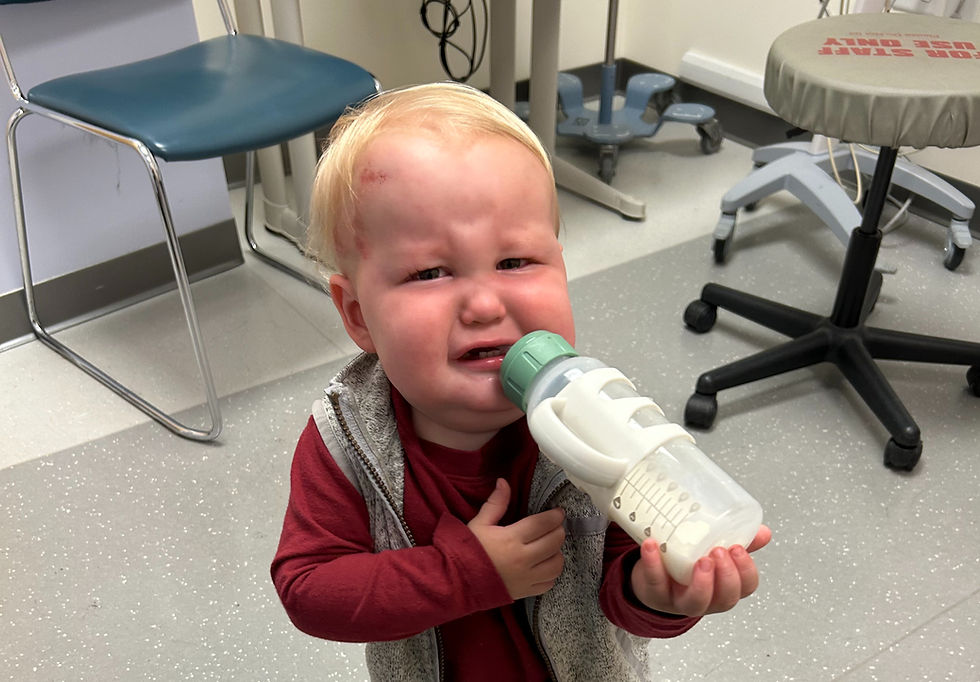
Steroid weeks were brutal. Imagine a grown adult experiencing intense steroid side effects — but in the body of an 18-month-old. The mood swings. The nonstop hunger. The pain. The discomfort. Watching your child suffer and not being able to explain why is heartbreaking.
Then came the months on Blina (blinatumomab).
Blina was hard in a different way. It’s still relatively new, which meant there were line breaks, bag breaks, and constant fear of infection. Every interruption carried risk — bacteria entering the line, restarting the medication, or being placed on a strict timeline to avoid hospital observation.
It was nonstop stress.
Would something happen to Parker?
Would something happen to the bag?
Would he start bleeding through his line again?
Would the pump alarm go off in the middle of the night?
I remember putting a baby monitor in his room, not to listen for cries, but just to hear the pump — to make sure it was still running.
The Mental Load No One Sees

The mental load is relentless.
Even with calendars and reminders, there were days when Parker was taking six different medications — chemo, anti-nausea meds, Pepcid, steroids, antibiotics. Syringes lined up on the counter. Double-checking dosages. Making sure nothing was missed.
It’s exhausting to always be “on.”
To never fully rest.
To constantly worry that one small mistake could have big consequences.
How Caregivers Change Too
This is the part people don’t talk about enough.
Caregivers change.
If I’m being honest, I lost myself during Parker’s treatment. I became a shell of who I used to be. There was no time or energy left for anything else.
We didn’t see people — the risk of illness was too high.
We didn’t travel.
I stopped going to the gym.
Conversations were always about Parker — and while that’s not a bad thing, it became the only thing.
My world got very small. Survival-focused. Hollow at times.
Why Parker’s Pak Exists
Parker’s Pak was created during the Blina phase, because we walked that line. We’ve been in your shoes.
Every detail of the bag is intentional.
The clips are small so kids can’t easily open them.
There’s a secure place for extra tubing so kids can sleep comfortably.
It’s adjustable for growing bodies.
Separate compartments keep everything organized.
And the clear viewing window lets you quickly check the pump.
This bag wasn’t designed in theory — it was designed in the middle of real life, real fear, and real exhaustion.
If you’re walking this road right now, please know this:
What you’re doing is incredibly hard.
You are allowed to feel tired.
And you deserve care too.
You are not alone. 💛


Comments